
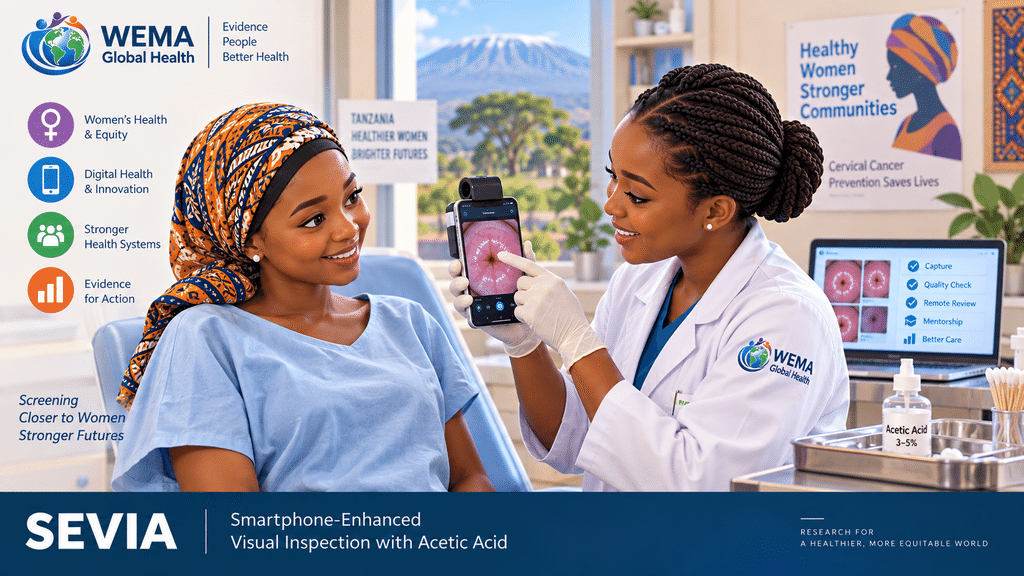
SEVIA - Smartphone-Enhanced Visual Inspection with Acetic Acid
SEVIA grew from a practical problem in cervical-cancer screening: services can expand faster than the specialist supervision needed to keep quality consistent. A frontline provider may perform visual inspection far from a specialist centre and encounter an image or clinical decision that is uncertain. The woman still needs a timely next step. SEVIA uses smartphone-supported cervical imaging and remote review to connect that moment of care with expertise elsewhere.
The programme is best understood as a quality system rather than an application. Capturing an image creates a record that can be reviewed, discussed and used for mentorship. Remote feedback can support the immediate clinical decision while also strengthening provider skills over time. The same digital workflow can generate information about image quality, interpretation, referral and follow-up, turning individual consultations into opportunities for programme learning.
SEVIA also illustrates how digital health evolves through implementation. The Tanzanian work established a connected model of screening, review and supervision; later adaptation in Rwanda required translation, local training and adjustment to a different service environment. The programme's significance therefore lies in the relationship between technology and the system around it. A phone can make expert review more reachable, but benefit still depends on connectivity, provider workflow, referral services, patient navigation and the capacity to act on recommendations. SEVIA's contribution is showing how digital support can become infrastructure for quality improvement rather than a stand-alone technological intervention.