
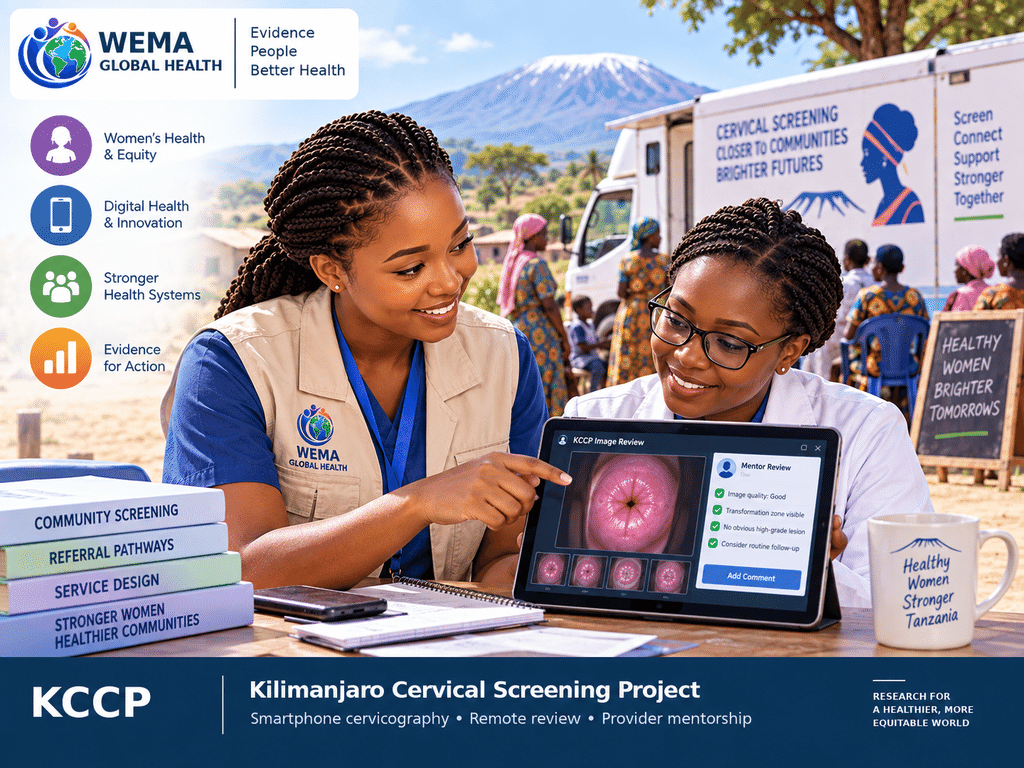
KCCP - Kilimanjaro Cervical Screening Project
KCCP belongs to an earlier phase of Tanzania's cervical-cancer prevention journey, when the immediate question was how to strengthen frontline visual screening in settings where specialist review was not routinely available. Expanding screening into more facilities could bring services closer to women, but it also risked increasing variation in interpretation and clinical confidence. KCCP responded by connecting point-of-care screening with smartphone-supported image capture and remote mentorship.
The project helped turn supervision from an occasional event into something that could occur closer to the moment of care. A provider could document a cervical finding, share an image with an experienced reviewer and receive feedback that supported both the immediate decision and longer-term learning. This made the phone useful not as a replacement for clinical judgment, but as a bridge between distributed providers and concentrated expertise.
KCCP's importance is also historical. It established a service-design idea that later became more systematic in SEVIA: digital imaging can support quality assurance, mentorship and referral across distance. That lineage matters because it shows how innovation develops through accumulated implementation experience rather than appearing fully formed. The project therefore represents more than an early mobile-health trial. It is a foundation for a wider Tanzanian programme of cervical-screening quality, provider support and digital implementation research in which the central goal remains consistent care for women, not technology for its own sake.