
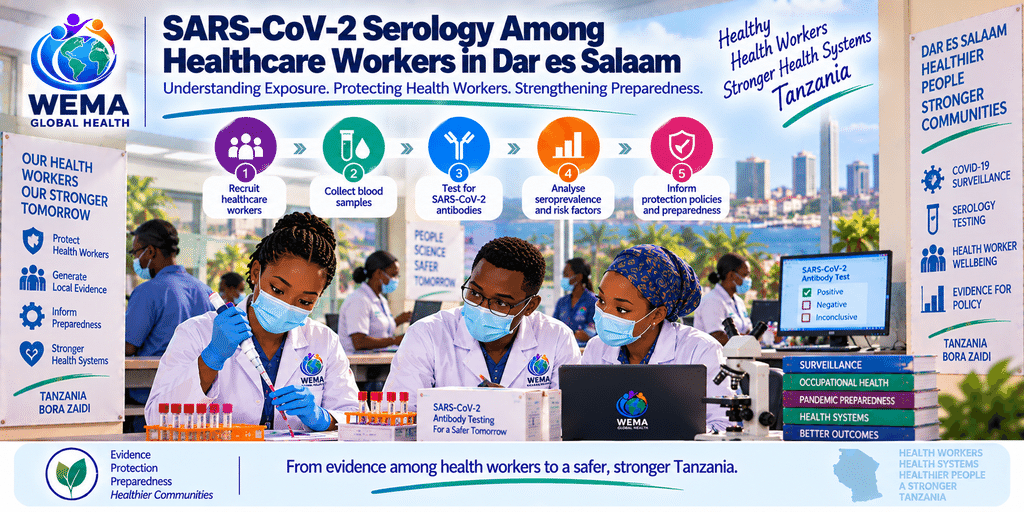
SARS-CoV-2 Serology Among Healthcare Workers in Dar es Salaam
During an emerging epidemic, healthcare workers occupy two roles at once: they are essential to the response and they may also experience repeated occupational exposure while evidence about transmission and immunity is still developing. The SARS-CoV-2 serology study in Dar es Salaam was designed around that uncertainty. Rather than relying on a single snapshot, it established a prospective structure for following healthcare workers over time and observing how antibody status changed as the epidemic and workplace exposures evolved.
The study focuses on national and regional referral hospitals in Dar es Salaam. Baseline serology provides an initial profile, while planned follow-up allows new seroconversion to become visible. Linking repeated laboratory measurement with clinical and occupational information creates a way to ask not only how common prior exposure may be, but how new evidence emerges within a workforce that continues providing care during an outbreak.
The project is best understood as a preparedness and surveillance study. Its value lies in the architecture of repeated measurement: establish a baseline, follow the same workforce, interpret changes in context and use that learning to sharpen questions about infection prevention and staff protection. The available study evidence establishes the design and team relationships but does not yet provide a mature outcome publication supporting final seroprevalence or seroincidence estimates. Keeping that distinction clear preserves the scientific purpose of the work without turning a surveillance design into an outcome claim.