
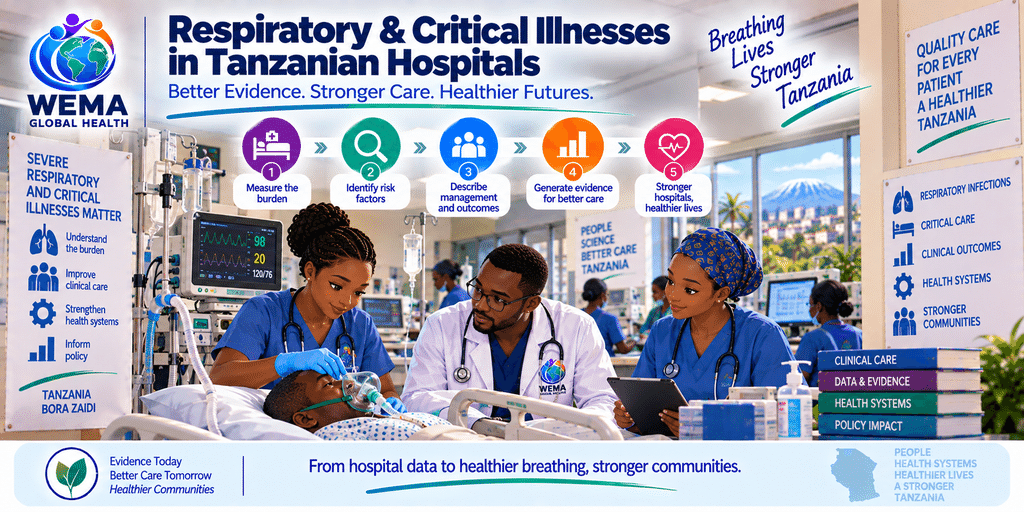
Respiratory & Critical Illnesses in Tanzanian Hospitals
Respiratory and critical illness compress health-system performance into minutes and hours. Patients may arrive with respiratory failure, severe infection, shock, cardiovascular emergencies, trauma or other life-threatening conditions, and the health system must recognize severity, begin treatment and decide quickly where the patient should go next. Planning that response requires more than memorable individual cases; it requires systematic evidence about who becomes critically ill, what conditions are involved and what happens after emergency presentation.
This Tanzanian research programme was designed to make those patterns measurable across hospital settings. It combines clinical epidemiology with questions about emergency and critical-care capacity, examining presentation, investigations, diagnosis, treatment and outcomes. A related national-hospital analysis provides a detailed view of critical illness over three years, while the wider study extends the question across selected hospitals and a longer study period.
The project therefore treats critical illness as both a clinical and a systems problem. A patient's outcome depends on the underlying disease, but also on timely recognition, diagnostics, available treatment, referral pathways, bed capacity and the ability to escalate care. By describing the burden and pathway of severe illness, the work creates an evidence base for deciding where emergency-care systems need stronger measurement, training, referral or critical-care resources. Its purpose is not to reduce critical illness to one diagnosis, but to understand the diverse conditions that converge on the same urgent need for coordinated care.