
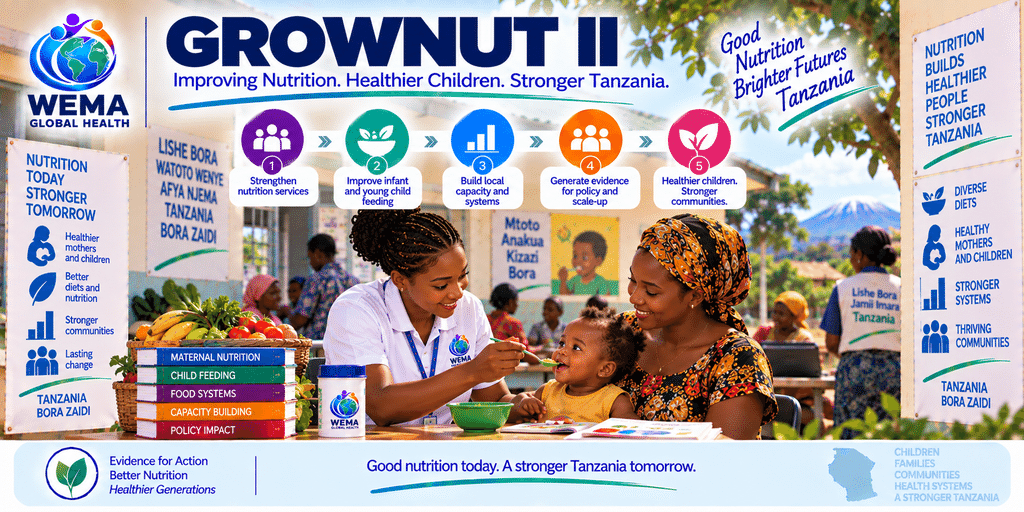
GROWNUT II
GROWNUT II begins from the idea that research capacity is built most effectively when training and useful science happen at the same time. Nutrition policy and programmes in African settings need locally generated evidence, while universities need researchers who can design studies, analyse data, write, compete for funding and lead programmes over the long term.
The programme uses nutritional epidemiology as a vehicle for building durable research and academic leadership in Tanzania and the Democratic Republic of Congo. Postgraduate education, mentorship and student research are organized around questions that matter to participating countries rather than separated into classroom training and later application. This allows methods learning and evidence generation to reinforce one another.
GROWNUT II also invests in the wider research cycle. Scientific writing, grant development, dissemination and policy engagement are part of how researchers become more independent and institutions become more able to sustain research programmes. International collaboration supports training and exchange, but the long-term objective is stronger local capacity to define questions, lead studies and connect evidence with policy and practice. The programme therefore treats capacity building as an institutional outcome, not a short course delivered beside the research.
The programme's central premise is that research independence grows when institutions can repeatedly train people who move from supervised projects toward their own questions, publications, grants and leadership roles.