DREAM-GLOBAL
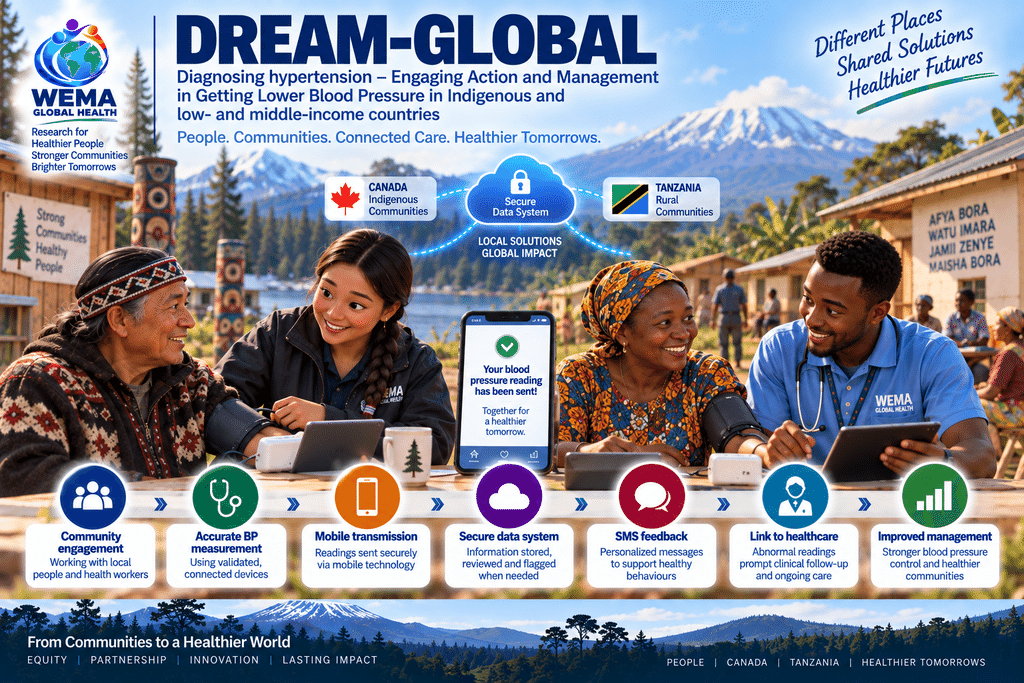
DREAM-GLOBAL emerged from the recognition that hypertension is common, often silent and frequently detected too late. People may feel well while cardiovascular risk accumulates, and communities with limited access to routine primary care may have fewer opportunities for screening, confirmation and long-term follow-up. The programme tested whether community-based blood-pressure measurement and mobile communication could bring detection and support closer to where people live.
DREAM-GLOBAL operated across settings in Canada and Tanzania, including First Nations communities, making implementation context part of the scientific story. Community screening identified people with elevated blood pressure, while digital messaging and links to clinical care were used to support management. The programme included randomized effectiveness evaluation, qualitative and implementation studies and methodological work on adaptation and readiness.
Its contribution is therefore broader than a single mHealth intervention. The randomized evidence showed that active text messaging did not improve blood-pressure levels in the final programme summary, while implementation research explained why digital support has to be interpreted alongside clinical response, medication access, workflow, culture and trust. DREAM-GLOBAL helped move the field away from the assumption that sending more messages automatically produces better chronic-disease control.
Within the WEMA portfolio, the programme is an important predecessor to STOP-NCDs. It demonstrates how community reach and digital communication can be studied rigorously while also exposing the limits of technology when the surrounding health system is not ready to act on the information generated.