
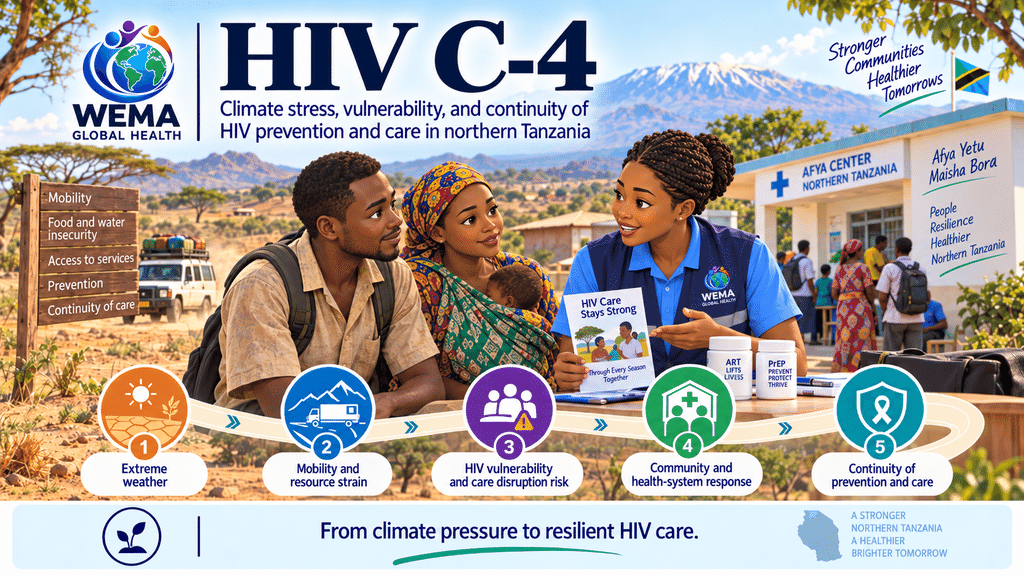
HIV C-4
HIV C-4 widens the usual picture of the HIV care cascade. Testing, prevention, treatment and viral suppression are clinical milestones, but reaching each one depends on transport, food and water security, livelihoods, mobility, functioning facilities and reliable medicine supply. Climate-related shocks can affect those systems before their consequences appear in a laboratory result.
The study uses existing longitudinal and population-research infrastructure in northern Tanzania to examine how extreme weather, movement and resource insecurity intersect with HIV-related vulnerability and continuity of care. Rather than treating climate as a distant environmental exposure, HIV C-4 asks how environmental pressure may become a health-system and social problem: whether drought, heat or other shocks alter mobility, prevention choices, service reach or the ability to maintain treatment routines.
The project is deliberately cautious about causation. A weather event does not produce the same outcome for every household, and social pathways such as income, gender, transport and food security can mediate what happens next. HIV C-4 therefore uses observational evidence to identify patterns and vulnerable points in the care pathway. The practical objective is to understand where continuity may be most fragile and what kinds of service adaptations could help protect HIV prevention and treatment during climate-related disruption.