
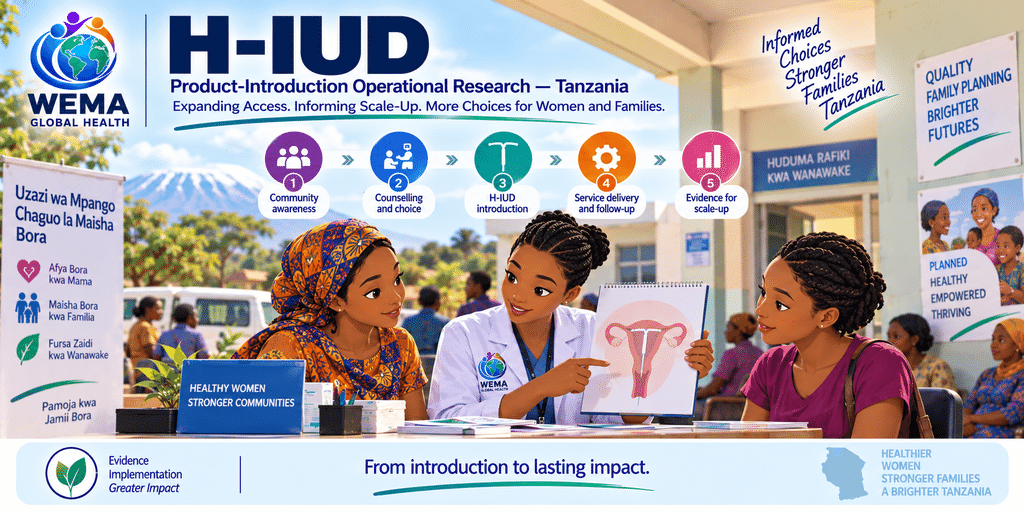
H-IUD Product-Introduction Operational Research - Tanzania
Expanding contraceptive choice requires more than adding a new product to a supply list. A method has to fit counselling, provider skills, informed consent, insertion and removal, side-effect support, follow-up and the routines of the services expected to offer it. Tanzania's hormonal intrauterine device operational research was designed to generate local evidence on those conditions before wider introduction.
The study followed implementation across 20 primary-health-care pilot sites in Dar es Salaam and Dodoma. It examined whether providers could be prepared to counsel and deliver the H-IUD confidently, how clients experienced the service, and what kinds of mentorship and facility support helped the method become part of routine family-planning care. The work therefore treats introduction as a learning process rather than a one-time training event.
The central purpose is responsible expansion of choice. International evidence can establish that a contraceptive method is effective and safe, but national programmes still need to know how the method will function within local services and how people will experience the pathway from counselling through follow-up or removal. Tanzania's study provides that implementation perspective. Training is linked with repeated mentorship, service data are used to understand real use, and client experience is followed alongside provider readiness. This allows programme decisions to be informed by locally generated evidence while keeping informed choice at the centre: the aim is not to promote one method, but to make an additional option available through services that are prepared to deliver it well.