
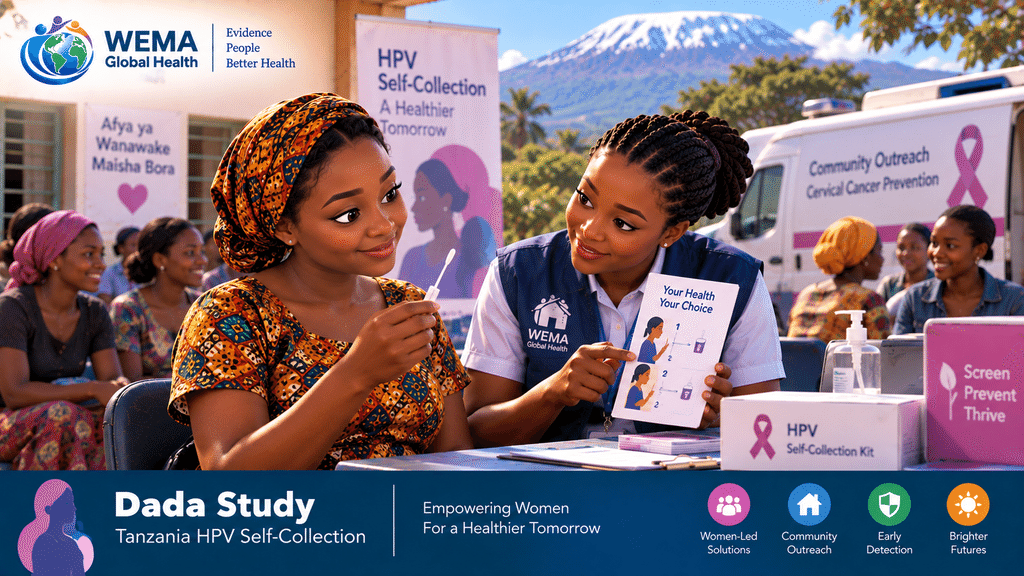
Dada Study - Tanzania HPV Self-Collection
The Tanzania Dada Study begins with a simple but consequential question: can cervical-cancer screening reach more women when the first step can occur with greater privacy and convenience? HPV self-collection changes the entry point by allowing women to collect a sample themselves, but the public-health value of that option depends on whether women understand the invitation, trust the process and can move through the result and follow-up pathway.
The project focuses on recruitment as part of the intervention. It compares group and individual approaches to inviting women to self-collect, recognizing that the way information is delivered may shape confidentiality, confidence, social support and willingness to participate. This is important because an accessible screening technology cannot benefit women who never receive, understand or act on the invitation.
Self-collection can reduce barriers related to pelvic examination, time, travel or embarrassment, yet it does not complete cervical-cancer prevention on its own. Samples must be handled reliably, results returned clearly and women with positive findings connected to appropriate triage and treatment. The Dada Study therefore sits within a wider Tanzanian implementation story in which widening access at the front door must be matched by a downstream system capable of completing care. Its distinctive contribution is to make the first contact with screening visible as a scientific question, showing that recruitment, communication and trust can be studied as carefully as laboratory and clinical performance.