
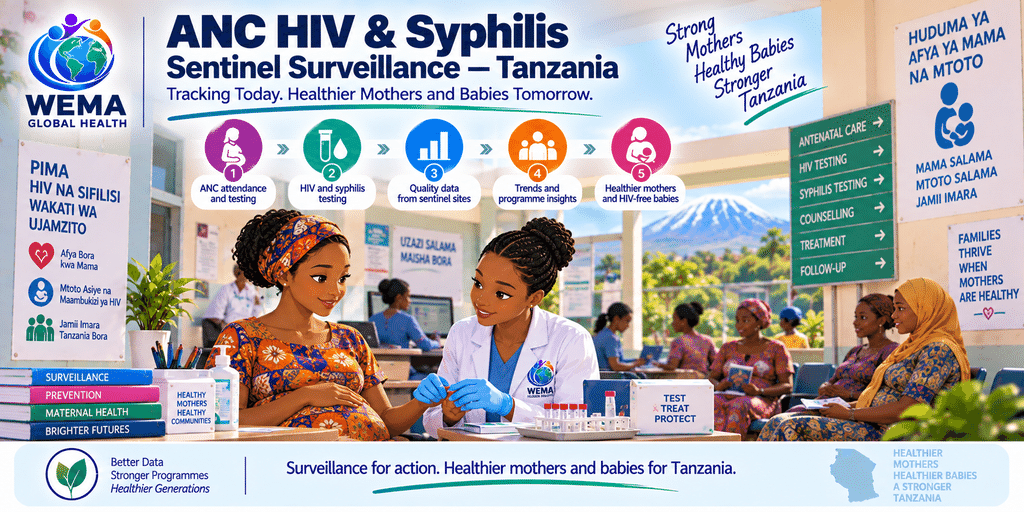
ANC HIV & Syphilis Sentinel Surveillance - Tanzania
Antenatal clinics provide a recurring national window into HIV and syphilis among pregnant women. Each visit is primarily a care encounter, but when testing and routine information are organized carefully, antenatal services can also reveal population patterns that help programmes understand burden, treatment coverage and opportunities for prevention. Tanzania's seventh ANC HIV and syphilis sentinel surveillance round was designed to serve both purposes: generate epidemiologic evidence and test how far routine programme data could support future surveillance.
The 2020 round enrolled 38,783 antenatal attendees at 159 sites across all 26 mainland regions. Sites represented urban, semi-urban and rural settings, allowing the survey to retain geographic breadth while assessing the quality and agreement of routine PMTCT information and HIV testing. The project therefore goes beyond estimating prevalence. It asks whether a mature prevention-of-mother-to-child-transmission programme can increasingly use its own routine data as a dependable surveillance resource.
Linked analyses have used the surveillance dataset to examine HIV burden and care indicators among pregnant women, while the wider programme also includes syphilis surveillance. Together, the work connects maternal care, infectious-disease epidemiology and health-information quality. Its significance lies in the transition it makes visible: from periodic sentinel surveys toward stronger use of routine programme data, provided that testing, completeness and consistency are good enough to support that change. Surveillance becomes not only a way to describe an epidemic, but a way to strengthen the information systems embedded in everyday maternal care.