
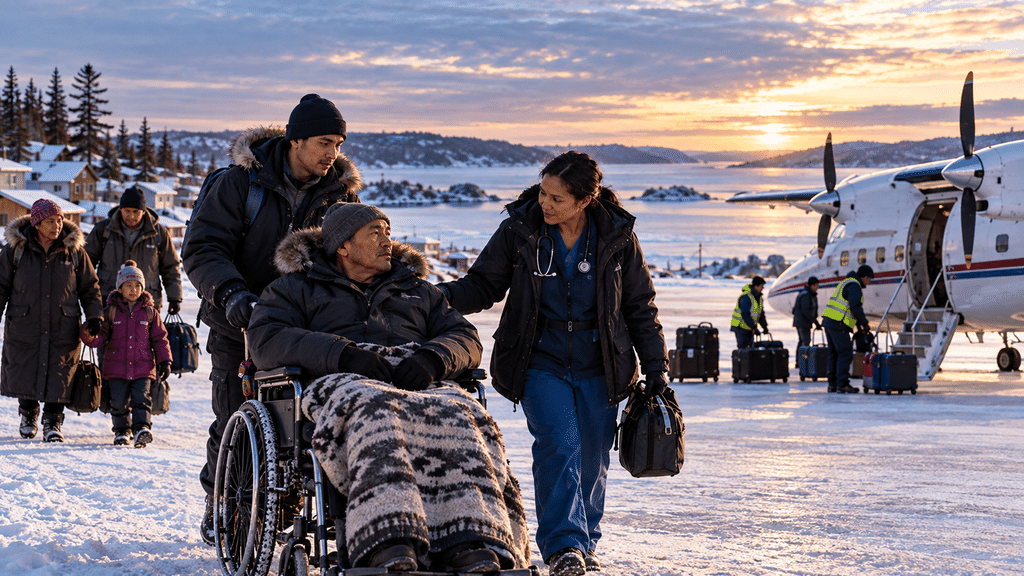
Distance is sometimes treated as a patient characteristic: someone simply lives far from care. But geography is also a health-system design choice. Where services are located, which functions are centralized, how often patients must travel, whether transport exists and whether remote support is available determine how strongly distance becomes a barrier.
Remote blood-pressure programmes changed which parts of care required travel by moving measurement and communication closer to communities. HPV self-sampling projects explore a similar possibility for cervical screening. Maternal emergencies illustrate the opposite: when definitive treatment must occur at a facility, transport becomes part of care. Kidney research shows that repeated specialist treatment can make relocation itself a health burden.
Geographic equity is therefore not achieved by putting identical services everywhere. It requires deciding which capabilities must be local, which can be supported remotely, which require physical referral and how people move between those levels without unreasonable cost, delay or cultural disruption.
Publications behind this Insight
What DREAM-GLOBAL Learned From the People Using the Technology
What DREAM-GLOBAL Learned From the People Using the Technology. 2019. 10.2196/12639.
Open publicationCommunity-Based Emergency Transport for Maternal Emergencies in Shinyanga
Community-Based Emergency Transport for Maternal Emergencies in Shinyanga. 2023. 10.1371/journal.pgph.0001487.
Open publicationEvidence behind this Insight
- 1. Tobe SW, et al. DREAM-GLOBAL implementation. 2019. DOI 10.2196/12639. What DREAM-GLOBAL Learned From the People Using the Technology
- 2. Government of Canada. Listening to Our Women. WEMA Project
- 3. Munishi C, et al. m-mama. 2023. DOI 10.1371/journal.pgph.0001487. Community-Based Emergency Transport for Maternal Emergencies in Shinyanga