
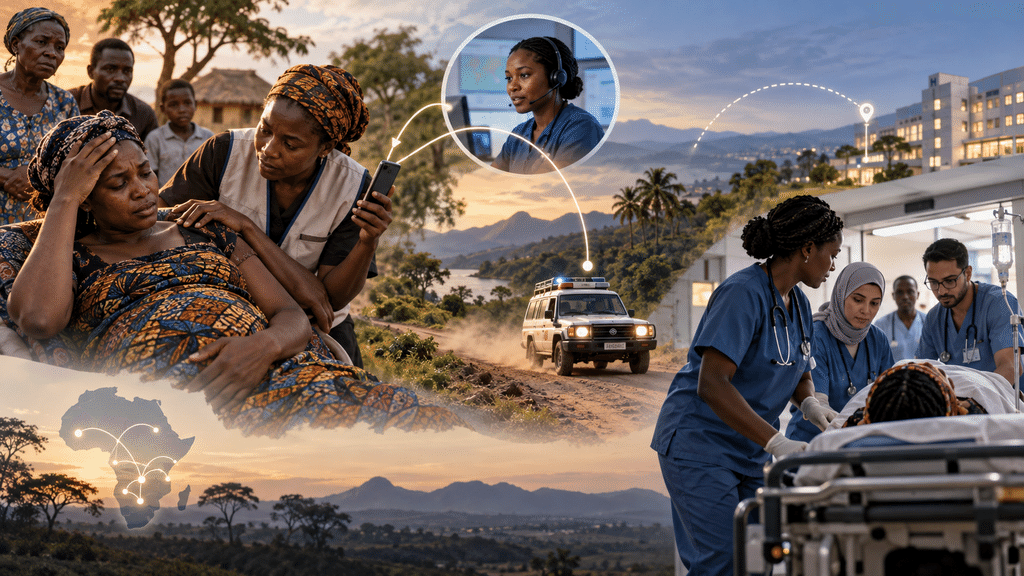
Maternal emergencies expose a simple but unforgiving reality: recognizing danger is not enough if a woman cannot reach appropriate care in time. Delays in transport and referral can turn a treatable complication into a life-threatening event, particularly where ambulances are scarce and facilities differ in the level of care they can provide.
The m-mama programme in Shinyanga redesigned that pathway around local constraints. It combined digital triage and dispatch with the existing ambulance network and trained community taxi drivers who could provide backup transport. A cost-effectiveness analysis examined 989 completed referrals across six councils; around seven in ten were completed using community taxis. A companion implementation study examined sustainment and the conditions required for the pathway to keep functioning.
The broader lesson is that referral systems are networks. A woman, family member or community health worker has to recognize the problem; someone must activate the system; the system must identify an appropriate destination; transport has to be available; and the receiving facility must be ready. Strengthening only one link can leave the rest of the emergency pathway fragile.
Publications behind this Insight
Community-Based Emergency Transport for Maternal Emergencies in Shinyanga
Community-Based Emergency Transport for Maternal Emergencies in Shinyanga. 2023. 10.1371/journal.pgph.0001487.
Open publicationWhat Makes an Emergency Transport Innovation Sustainable?
What Makes an Emergency Transport Innovation Sustainable?. 2023. 10.1371/journal.pgph.0002097.
Open publicationEvidence behind this Insight
- 1. Munishi C, et al. Community-based emergency transport in Shinyanga. PLOS Global Public Health. 2023. DOI 10.1371/journal.pgph.0001487. Community-Based Emergency Transport for Maternal Emergencies in Shinyanga
- 2. Njiro BJ, Ngowi JE, et al. Sustainable emergency transportation for maternal and newborn health. 2023. DOI 10.1371/journal.pgph.0002097. What Makes an Emergency Transport Innovation Sustainable?