
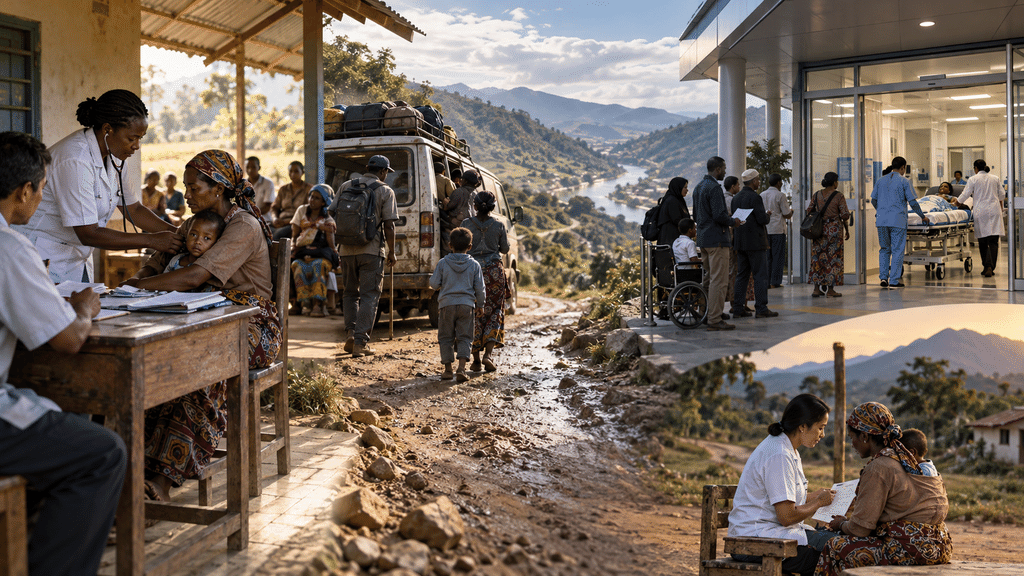
The cost of chronic disease is not limited to a consultation fee or a packet of medicines. Long-term conditions create repeated transport costs, lost work, caregiver time, diagnostic expenses and the opportunity cost of spending hours moving through care. In settings where treatment must be sustained for years, small recurring costs can become the reason continuity breaks.
Studies of chronic-disease care in rural Tanzania and systematic reviews across low- and middle-income countries show why financial burden should be measured from the household perspective as well as the health-system perspective. A service may be officially free while patients still pay for travel, food away from home, tests, medicines obtained privately, or income lost while waiting. Integrated chronic-care economic studies add another question: whether combining services can reduce repeated visits and duplicated system costs without increasing workload or lowering quality.
This reframes affordability. The relevant question is not simply whether a programme is cheap to deliver, but whether people can remain in care without sacrificing essentials. Financial protection is therefore part of adherence, equity and implementation design.
Publications behind this Insight
Evidence behind this Insight
- 1. Verjans M, et al. Non-medical and opportunity costs of chronic disease care in rural Tanzania. BMJ Open. 2024. DOI 10.1136/bmjopen-2023-080466. External evidence
- 2. Kazibwe J, et al. Household financial burden of NCDs in LMICs. 2021. DOI 10.1186/s12961-021-00732-y. External evidence
- 3. Shiri T, et al. Economics of integrated HIV/diabetes/hypertension care. BMC Medicine. 2021. DOI 10.1186/s12916-021-02094-2. External evidence