220 publications
← Pause →
A Health-Systems Appraisal of Cervical-Cancer Prevention Services in Tanzania Adapting a Stigma-Reduction Workshop for Adolescent Sexual and Reproductive Health in Kilimanjaro Risk Communication, HPV Knowledge and Self-Sampling Among Women in Tanzania She Needs Permission: Barriers and Enablers to Maternal and Reproductive Health Services Community-Based Emergency Transport for Maternal Emergencies in Shinyanga What Makes an Emergency Transport Innovation Sustainable? Renal Dysfunction Among People Living With HIV in Dar es Salaam HIV Drug Resistance Among Adolescents and Young Adults in Tanzania Emerging Integrase-Inhibitor Resistance in Tanzania HIV Burden and the Care Gap Among Pregnant Women in Tanzania Primary Health Care and Tanzania’s Double Burden of Disease Maternal and Perinatal mHealth in Sub-Saharan Africa: From Feasibility to Scale DETEC-TB: Designing Active Case Finding Around Contact Networks Non-Communicable Diseases Week: Turning Locally Generated Evidence Into a Shared Platform What Changes When Cardiovascular Risk Is Studied Across 21 Countries? When the Air Outside Becomes a Cardiovascular Exposure Cooking Fuel, Household Air and the Exposure Gradient Inside the Home Black Carbon Makes the Household Energy Transition Visible Food Quality Is More Than Calories: Glycaemic Index and Cardiovascular Risk The Kilimanjaro Method: Turning a Smartphone Into a Mentorship Link When Information and Transport Work Together: SMS, eVouchers and Screening Uptake From a Training Tool to a National Quality System: What SEVIA Learned at Scale Before AI Can Read a Cervix, It Has to Know It Is Looking at One What People Said About SEVIA: Implementation Beyond Technical Performance How Should Women Be Invited to Self-Sample? The Dada Study Design When Experience Is Not Enough: Reassessing the Accuracy of Visual Cervical Screening When Fuel Type Is Not Enough: Measuring Household Air Pollution at Scale Kerosene Was Not the Clean Transition Fuel Many Assumed Urbanization Changes Where Physical Activity Comes From What Makes a City Easier to Walk or Cycle? Can Photographs Reveal an Obesogenic Environment? A Global Diet Score Built Around Protective Foods Processed and Unprocessed Meat Did Not Tell the Same Story Nuts, Mortality and the Importance of Testing Familiar Advice Globally Local Evidence Is Part of the NCD Response From Local Evidence to a Coordinated National NCD Response Primary Health Care as Tanzania’s Route Toward Universal Coverage What Was Tanzania Researching About RMNCAH in Primary Care? What Makes a Health System Responsive and Resilient? Keeping Essential Care Running Through a Pandemic Task Sharing Is a System Design, Not Just a Staffing Fix When More Tailored Text Messages Did Not Lower Blood Pressure More What DREAM-GLOBAL Learned From the People Using the Technology How Do You Evaluate an mHealth Intervention Across Different Cultures? Readiness Is a Conversation, Not a Score Syphilis Was Declining Nationally — but the Burden Was Far From Even Alcohol Use Belongs Inside the HIV Care Conversation When Extreme Weather Becomes an HIV Vulnerability A Bed-Net Voucher Was Feasible at Scale — but Extra Text Messages Did Not Increase Redemption Why the Voucher Was Not Enough: What HASA Learned About Implementation When Universal Coverage Still Produced Unequal Access to Transplantation The Transplant Gap Appeared Across Four Different Health Systems The Largest Transplant Gap Was Among Younger Indigenous Adults Once a Transplant Happened, Graft Outcomes Were Similar Place Was More Than a Distance on the Transplant Pathway Leaving Home for Hemodialysis Changed More Than Treatment Good Kidney Research Requires More Than the Right Clinical Question Universal Care Did Not Mean the Same Kidney-Care Experience for Everyone When Geography Turned Dialysis Modality Into a Constrained Choice The Barriers to Home Dialysis Were Not Only Technical Kidney Disease Arrived Earlier and Required Longer Journeys for First Nations Patients Building Acute Dialysis Where No AKI Treatment Existed Twenty Patients Showed What Acute Peritoneal Dialysis Could Make Possible A Dialysis Machine Alone Does Not Create a Nephrology Programme From Local Experience to Practical Guidance for Acute Peritoneal Dialysis When a Dangerous Pregnancy Complication Is Understood as Bewitchment Scaling Emergency Transport Required More Than More Vehicles Digital Maternal Care Was Fragmented Before It Could Become Intelligent A Maternal-Health Career Became a Map of Tanzania’s Progress School Readiness Is a Population Health Outcome Before It Is a Classroom Outcome Malocclusion Was Common — but Dental Care Was Not Equally Used Orthodontic Treatment Can Improve Health While Temporarily Making Daily Life Harder Violence During Pregnancy Reached Into Antenatal Care and Early Infant Feeding Antenatal Care Was Shaped by the Couple and the Household, Not the Woman Alone A Conference Can Become Research Infrastructure When Its Evidence Is Traced Gout Knowledge Was Low Long Before Treatment Became the Question Emergency-Department Respiratory Trends Became a Form of Outbreak Intelligence One in Ten Emergency Patients Was Critically Ill — but Most Were Not Going to an ICU Dolutegravir Improved the Treatment Landscape — but Suppression Still Varied by Age and Adherence A STEMI Network Made Thrombolysis Possible — and Exposed How Uneven the System Still Was Drug Use Was Common Enough to Demand a Public-Health System, Not Only Individual Treatment People Wanted Digital Drug-Use Information Even When Many Did Not Own a Smartphone How You Ask About Spending Can Change the Financial Burden You Think You See Measured Household Air Pollution Was Linked to Respiratory Symptoms — Especially in Women Clean-Cooking Transitions Were Shaped by Communities and Countries, Not Only Household Choice Before Synthesizing mHealth Evidence, the Review Team Made the Rules Visible Glycaemic Load Became a Diabetes Question, Not Only a Cardiovascular One Ultra-Processed Food Was Linked to Mortality — but Not Every Cardiovascular Outcome Social Isolation Looked Like a Health Exposure Across Economies Fish Intake Did Not Mean the Same Thing in Primary and Secondary Prevention Depressive Symptoms Traveled With Cardiovascular Risk Across Economies Women Had Lower Cardiovascular Risk but Received Less Secondary-Prevention Care A Simple Insulin-Resistance Index Predicted Risk Across Five Continents Activity Limitation Was More Common Where Assistive Support Was Scarcer Medication Exposure and IBD: Association Is Not Causation Two Spirometers, One Cohort: Could Measurements Stay Comparable? Kidney-Disease Knowledge Was Low Even Where Interest in Learning Was High Acute Kidney Injury in Intensive Care Exposed a Double Resource Problem School Health Implementation Needed a Better Language for Context Universal Kidney Coverage Has to Include More Than Dialysis Machines Sodium and Potassium Made More Sense Together Than Alone When a Kidney Disease Has No Clear Cause, Measurement Must Come First Six to Eight Hours Was the Lowest-Risk Range - Not a Universal Sleep Prescription A Global Polypill Trial Had to Solve Regulation Before It Could Test Prevention A Swarm of Bees Became an Acute Kidney Emergency Dairy and Cardiovascular Risk Did Not Follow the Simplest Saturated-Fat Story Essential Diabetes Medicines Were Not Equally Available or Affordable Salt, Blood Pressure and Cardiovascular Risk Did Not Form a Straight Line Secondary Prevention Was More Available to People With More Resources Before Testing the Messages, the Trial Made the Workflow Explicit Social Connections Were Modestly Linked to Better Hypertension Management When Dialysis Has to Be Rationed, the Selection Rules Become Part of the Health System Home Dialysis Cannot Expand If Patients Never Hear About It Hypertension Control Needs More Than One Implementation Strategy Women Cancer Inequity Is Preventable - but Only Across the Whole Pathway Where a Woman Lives Still Shapes Whether Cancer Is Prevented, Found and Treated Household Wealth Changed the Hypertension Care Cascade - but Not the Same Way Everywhere Grip Strength Needed Global Reference Ranges, Not One Imported Normal Smartphone Feedback Helped Community Nurses Learn Cervical Screening Mosquito-Net Coverage and Malaria Mortality Moved Together Across Rural Tanzania Acute Kidney Injury Becomes More Dangerous When Diagnosis and Treatment Arrive Late A Text Message Can Be Evidence-Based and Still Miss the Person Reading It Most Women Had Heard of Cervical Cancer - Very Few Had Been Screened What Institutions Buy Can Shape the Food Environment Treating Hyponatremia Requires Evidence About Both Correction and Harm Dialysis Modality Did Not Carry the Same Outcome Pattern Across Populations Peritoneal Dialysis for Acute Kidney Injury Deserved Re-examination, Not Dismissal Hemodialysis and Peritoneal Dialysis Converged in More Recent Canadian Outcomes Early Nephrology Referral Did Not Guarantee a Good Dialysis Start Hemoglobin Variability Was a Prognostic Signal, Not a Treatment Target Could Dialysis Facilities Measure Quality Through Modifiable Practices? Dialysis Modality and Survival Varied Across Ethnic Groups - Without Explaining Why Vasopressin Antagonists Opened a New Route to Correcting Hyponatremia Diabetes, Kidney Disease and Indigenous Health Were Already Signalling a Systems Crisis Height Was Not a Universal Marker of Cardiovascular or Cancer Risk Psychosocial Risk Traveled With Cardiovascular Risk Across Economies The Diseases That Fill Hospitals Differed Sharply Across Countries Acute Peritoneal Dialysis Was Economically Plausible - but Subsidies Still Mattered Chronic Disease Could Push Households Into Financial Crisis A Global Hypertension Programme Learned Faster by Sharing Across Projects Cultural Safety Had to Be Designed Into Digital Health Research Tanzania Built Nephrology Capacity From a Very Small Base Patient Navigation Could Support the Whole Cancer Journey - but Evidence Was Thin Process Evaluation Explained What Outcome Numbers Alone Could Not Polluting Household Fuels Were Linked to More Than Respiratory Symptoms Socioeconomic Position Changed Cardiovascular Risk Differently Across Countries Atrial Fibrillation Was Not Detected or Treated Equally Across Countries Essential Cardiovascular Medicines Shape Risk Only If People Can Actually Obtain Them Kidney Health Runs Through the Sustainable Development Goals Household Air Pollution Left a Longitudinal Signal in Lung Health Rural Residence Did Not Mean the Same Screening Disadvantage Everywhere CKDu Research Needed Shared Methods Before It Needed One Simple Cause Global-Health Training Was Commonly Desired but Unevenly Built Into Nephrology Fellowships Blood-Pressure Medicines Can Be Available and Still Be Unaffordable Malaria Deaths Clustered in Place and Time Cardiovascular Vulnerability Is Built From More Than Biology Dialysis Guidelines Exposed Modifiable Gaps in Routine Practice Distance Alone Could Not Explain the Transplant Gap Cardioprotective Medicines Were Underused in Hemodialysis Care Home Dialysis Was Used Less Often by Indigenous Patients Despite Similar Survival The Transplant Gap Sat Alongside a Modest Survival Gap After Dialysis Started Poor Sleep Was Part of the Burden of Chronic Kidney Disease Before Dialysis Hyponatremia Becomes Easier to Reason Through When Salt and Water Are Separated A Rare Seizure Presentation Exposed an Infection Hidden Inside a Brain Tumour Kidney-Failure Care Needs an Integrated Plan, Not a Single Technology Equity in Kidney Failure Care Is a Resource-Allocation Question Bedtime Was Associated With Outcomes - Not a Prescription for One Universal Clock Kidney-Transplant Outcomes Improved Across Two Decades of Changing Care Cancer Delay Was Built Across Symptoms, Referrals and Treatment Pathways Ultra-Processed Food Entered the IBD Risk Conversation Sleep Timing and Napping Traveled With Obesity Risk Refined Grains and Whole Grains Did Not Carry the Same Cardiovascular Signal Community-Acquired AKI Could Be Recognized and Managed in Low-Resource Settings The Polypill Moved From a Design Question to Clinical Outcomes Diabetes and Cardiovascular Mortality Diverged Across Country-Income Settings White Rice Was Linked to Diabetes Risk Differently Across Populations mHealth for NCDs Failed at Systems Boundaries, Not Only Screens Supportive Kidney Care Belongs Inside the Service, Not Beside It Air Pollution Was Associated With Blood Pressure Across Household and Outdoor Environments A Pandemic Became a Household Financial Shock Across Countries Smoking Risk Was Not Identical Across Economies High Cardiometabolic Risk Did Not Guarantee Use of Protective Medicines Sitting Time Carried Risk Across Very Different Countries Women’s Lower Cardiovascular Event Rates Did Not Mean Lower Risk-Factor Burden Most Cardiovascular Events Still Occurred Outside the Highest-Risk Groups Knowing What Protects the Heart Was Associated With Healthier Behaviour Heart Failure Looked Different Across 25 Countries Walking Limitation Became a Life-Course Marker of Health Combining HPV Genotyping With Automated Visual Evaluation Sharpened Risk Stratification Clonal Hematopoiesis Added Cardiovascular Risk Information in CKD Hormonal IUD Acceptability Was Shaped by Everyday Experience and Trust Digital Maternal Records Were Judged Through Trust, Workflow and Experience Ultra-Processed Grains Raised a More Specific IBD Question Global Hypertension Implementation Needed Behaviour Change at More Than One Level CanPREDDICT Was Built to Follow the Outcomes Routine CKD Measures Missed New Biomarkers Predicted Death Better Than Kidney Replacement at One Year Secondary-Prevention Medicines Stayed Low Despite Years of Follow-Up Cervical AI Needed an Image-Quality Gate Before It Needed a Diagnosis A National Kidney Registry Had to Be Valid Before It Could Be Trusted Kidney Disease Burden in Indigenous Communities Was Already a Systems Warning A Gut-Microbial Metabolite Traveled With Cardiovascular Risk in Advanced CKD Glomerulonephritis Did Not Add Cardiovascular Risk Beyond Kidney Function and Established Risk Factors Kidney Biomarker Thresholds Changed as Filtration Fell Health-Service Delivery Is the Architecture Behind Primary Health Care Peritoneal Dialysis Outcomes Needed a Common Language Chosen With Patients Global Hypertension Research Needed Common Measures Before It Could Learn Together AI Could Read Pap-Smear Images — but Local Validation Still Matters HPV Vaccination Was More Acceptable When Education Came With It School-Based HPV Integration Saved Steps but Exposed Workforce and Referral Limits A Companion DOPPS Analysis Put Guideline Gaps Into Estimated Life-Years Predialysis Kidney Disease Showed How Disadvantage Begins Before Kidney Failure PAVE Designed Cervical Screening as a Screen–Triage–Treat System, Not a Single Test Earlier Menopause Added a Women-Specific Signal to Cardiovascular Risk Kidney-Care Capacity Was High on Average but Uneven Across the Caribbean Reproductive Care Barriers Were Social and Systemic at the Same Time Dual Diagnosis Needed Treatments That Could Address Both Sides of the Problem A Small Change in Sensor Geometry Expanded What the Device Could Detect Integrative Thinking Became Clearer When Its Definitions Were Put Side by Side Red Blood Cells May Be More Than Passengers in Cancer-Associated Thrombosis A Blood Clot Is Not Uniform — and Neither Are the Red Cells Inside It
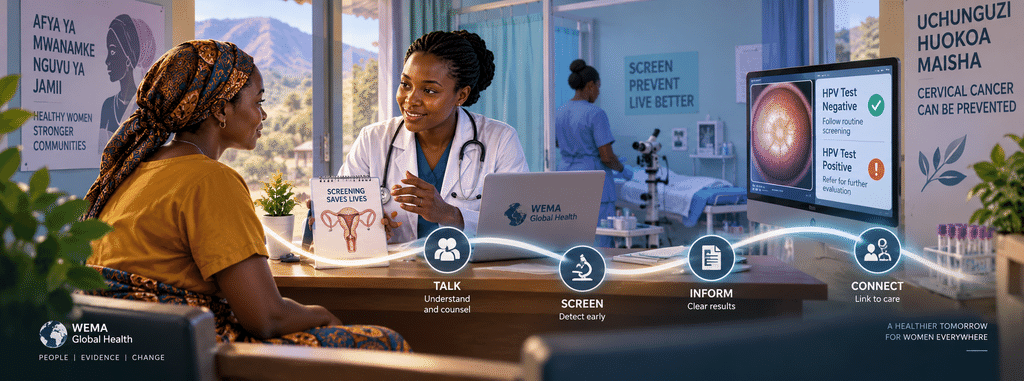
A Health-Systems Appraisal of Cervical-Cancer Prevention Services in Tanzania Low screening uptake can look like an individual choice when the real obstacle sits in the health system around the woman. This study asked what conditions make cervical-cancer prevention reachable, understandable and completable in Tanzania. The evidence showed that awareness alone cannot compensate for gaps in trained staff, geographic and financial access, trustworthy information, referral and treatment capacity. The study reframes cervical screening as a pathway that must work from first contact through treatment, not as a single attendance event.